Yes — when you choose a properly credentialed surgeon and an accredited hospital. Here is exactly how your safety is protected, and what to verify before trusting anyone with surgery abroad.
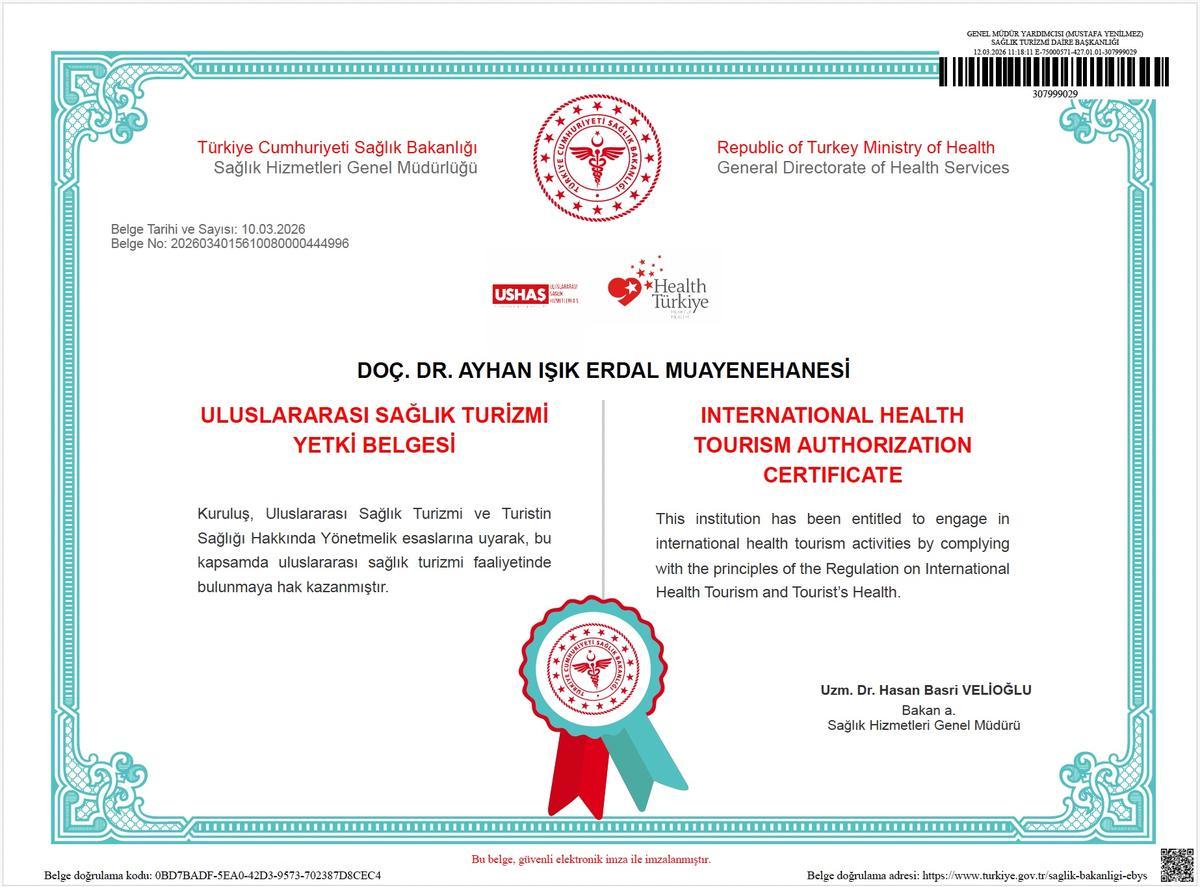
Dr. Erdal holds an International Health Tourism Authorisation Certificate issued by the Republic of Turkey Ministry of Health. Treatment provided under this authorisation is regulated, documented and protected under Turkish health-tourism law.
Every procedure takes place at an A+ hospital meeting international JCI standards, with sterile modern theatres, intensive-care availability and trained nursing staff.
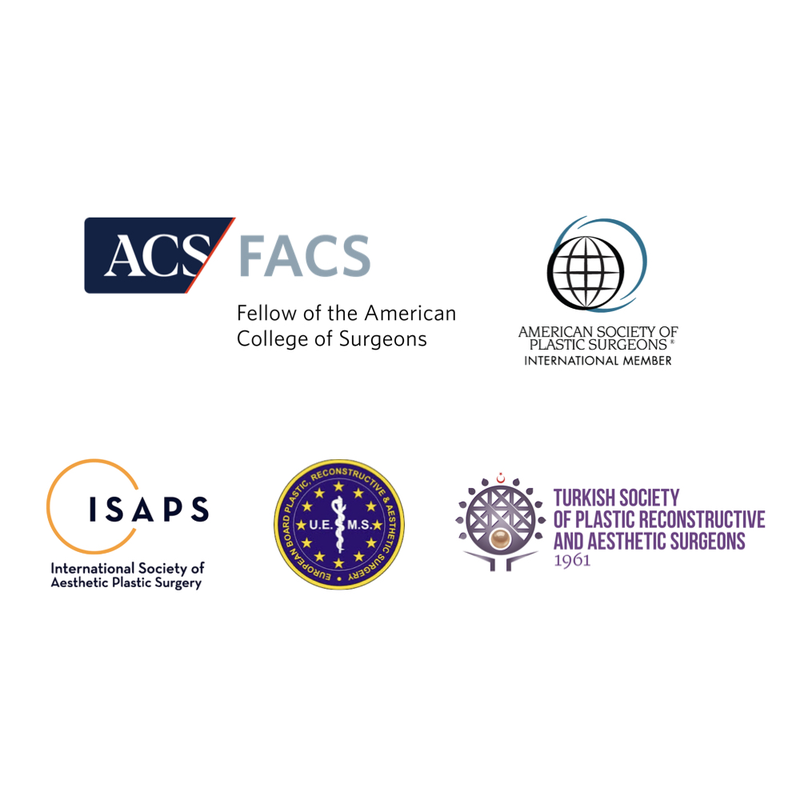
Surgery is performed personally by Dr. Erdal — double board-certified (FACS, FEBOPRAS), never delegated to a trainee or an unknown 'ghost' surgeon.
Anaesthesia is always administered and monitored by a separate board-certified anaesthesiologist, not the operating surgeon.
Detailed blood tests, imaging and examination confirm you are medically fit for surgery before anything proceeds.
An in-person review before you fly, then ongoing WhatsApp guidance with Dr. Erdal once you're home.
Dr. Erdal will decline or adjust a plan if it isn't in your best interest. Safety and a natural result always come before a sale.
No operation is risk-free, and a page about safety that avoids the word is not a safety page. What follows is what can go wrong, why, and what changes your own odds. None of it is an argument against surgery — it is the information you need in order to consent to it.
Every operation under general anaesthesia carries a shared set of possibilities, independent of the surgeon and of the country. They are uncommon, they are actively managed rather than merely hoped away, and they are discussed with you individually before any decision is made:
Safety draws its line at cumulative operating time and physiological load, not at ambition. As anaesthesia hours stack, so do the risks above — clotting, fluid shifts, slower wound healing. This practice therefore keeps combined cases inside a conservative window (commonly around six hours as the working ceiling, and less for higher-risk patients), plans them in an accredited hospital with an overnight stay, and decides by patient, not by menu: your health profile, BMI, smoking status and the specific operations set your ceiling — a package price does not. Where a wish-list exceeds that window, the honest answer is two trips rather than one heroic day. How that decision is actually made is set out in full, and the procedures page shows which plans usually combine and which are staged.
Through the 2010s the Brazilian butt lift recorded the highest mortality rate in cosmetic surgery, driven by one specific mechanism: fat injected into or beneath the gluteal muscle could enter large veins and travel to the lungs. That mechanism is removed by technique, not by reassurance — fat is placed in the layer above the muscle only, with ultrasound guidance so the cannula's plane is seen rather than believed, at conservative volumes, in a hospital with an anaesthesia team and overnight observation. Requests for extreme, disproportionate volumes are declined in writing. If you are considering a BBL anywhere, read the full account first — including the three questions to ask any clinic.
Risk is not evenly distributed. A clotting history, heavy smoking, a high BMI or borderline health markers each shorten the safe operating window and lengthen the argument for staging; pre-operative blood tests and examination exist to find these things before theatre, not after a problem. Two disclosures matter more than patients expect:
Remote care triages well; it cannot lay hands on you. So the escalation plan is written down before you book, not improvised afterwards:
| What you notice | Where it goes |
|---|---|
| Routine recovery questions — swelling, bruising, how an incision looks, whether something is normal | Photographs on the direct WhatsApp line, or your next scheduled photo review. Most post-operative questions are visual questions, which is why this works. |
| A concern that needs examining in person — a wound that is not settling, a change you cannot photograph clearly | Your local GP or clinic, with the English operation notes you flew home with, so no local doctor starts blind. We stay in the loop. |
| Heavy bleeding, breathing difficulty, signs of a clot, or spreading infection | Your nearest emergency department, immediately — then tell us. Any clinic that discourages that sentence is dangerous. |
This is the pathway you should demand from any surgeon abroad, in writing, before money moves. Ours is described in full on the journey page and tested in the aftercare guide.
Doing nothing is a legitimate outcome of a consultation. Dr. Erdal will decline or adjust a plan that is not in your interest, and “no” is a complete surgical plan when the alternative bends any of the rules above. Suitability for any procedure on this site is confirmed only by personal consultation and examination; individual results vary. See also the medical disclaimer.
Use this checklist with us — or with anyone you're considering. A trustworthy provider will answer all of it without hesitation.
Ask Dr. Erdal directly — he'll give you a straight answer.
Send your details and Dr. Erdal will personally review your case, then come back with honest options and a transparent all-inclusive quote.